

The publishing calendar says Monday, but the campaign still exists as scattered notes: one audience idea, several unchecked details, and no agreement about what belongs in a post, an image, or a fifteen-second clip. That is the situation facing a small community owner rebuilding navigation before a relaunch. The immediate job is to group rooms around member tasks instead of internal team jargon, using member journey, channel count, permissions, activity level, and category order. Producing assets before settling the message makes revision expensive. This article takes a community onboarding angle: connect the creative concept to a clear first member action. The aim is one controlled production chain, with human judgment at every handoff.
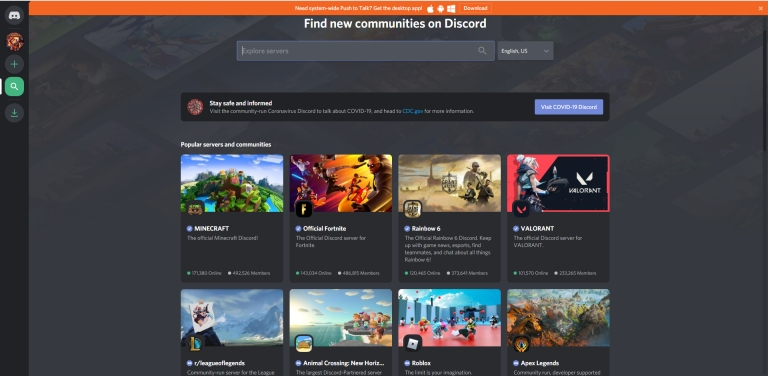
Translate the search into an observable outcome. A reader entering Discord category name generator does not need a wall of random words. The practical objective is to group rooms around member tasks instead of internal team jargon. Write that outcome above the campaign brief and reject ideas that do not support it. Search language is context, not finished copy. Use the supplied phrase once, then write naturally about names, labels, member paths, or room structure. Treat all unverified candidates as demonstrations rather than available identities.
Write the campaign brief in operational fields. Identify the intended producer and audience; in this case, the producer is a small community owner rebuilding navigation before a relaunch. Record the decision the audience faces, the single action the content should support, and the proof needed for any platform claim. Add member journey, channel count, permissions, activity level, and category order to a source table with an owner and check date. Give the editor a boundary as well as a target. Define voice with examples: calm, practical, lightly playful if appropriate, and willing to state uncertainty. Finish with formats, dimensions, duration, deadline, review owner, and approval conditions.
Generated material reduces blank-page time, but it creates specific review work. A model may invent a platform rule, imply that a name is available, repeat familiar hooks, or drift away from the requested brand voice. Images can contain broken words, misleading interface elements, impossible hands, duplicated objects, and inconsistent letterforms. Clips can change characters, colors, room labels, and object positions between shots. Visual polish does not prove accuracy. Keep research, policy interpretation, final typography, factual approval, and publishing decisions with a person.
Map the member journey before choosing a headline. Mark what the person sees before joining, what they must understand first, and what action follows. The campaign can then answer one moment at a time. Keep the same path visible in the caption, graphic, and clip.
Generate copy in stages. First request three message routes: a common mistake, a worked demonstration, and a review checklist. Ask each route to use only the brief and to flag missing support instead of inventing rules. Choose Discord voice channel names , then create a long explanation, compact caption, opening hook, and headline options. Keep fictional candidates visibly labeled. An illustrative structure using arrive, participate, learn, and get help can anchor the explanation. Delete any line that repeats the hook without adding a choice, method, or caution.
Build the short video as five decisions: difficulty, brief input, candidate or map, comparison, and next step. For a 25-second cut, allow about four seconds for context, seven for the example, eight for comparison, and six for the choice and caveat. Put narration, visible text, duration, and shot direction in separate columns. Let motion demonstrate the method. Use an illustrative structure using arrive, participate, learn, and get help throughout. Assemble shots manually, then review object and character continuity, screen geometry, caption timing, safe areas, pronunciation, and comprehension with sound muted.
Convert the selected message into a visual job before writing an image prompt. Decide whether the asset must compare names, sequence a member path, demonstrate a layout, or summarize checks. Use an illustrative structure using arrive, participate, learn, and get help as the shared illustrative scene. Specify composition, focal point, background, lighting, palette, aspect ratio, and empty space for verified text. Keep exact characters out of raster text. Review fingers, faces, objects, interface shapes, repeated icons, text fragments, numbers, and accidental brand marks at full size.
Platform adaptation requires a fresh edit. A text-led network can carry the reasoning as a short thread; an image-led feed needs a strong first panel and contextual caption; a vertical clip needs immediate motion, large subtitles, and one point; a longer video can retain the method and limitations. Protect meaning while varying the entry point. Check mobile crops, platform dimensions, interface-safe margins, caption wrapping, and silent playback. Related assets should feel coordinated without looking copied.
Run human review in separate passes. Verify every platform fact against its source and check dates; recalculate any counts, character limits, timings, units, or percentages. Compare tone with the brief and remove repeated or overconfident language. Inspect actual exports for dimensions, crop, safe areas, image text, digits, hands, faces, objects, and interface artifacts. Read the copy aloud. Watch video for character and object continuity, subtitle accuracy, timing, contrast, and meaning with sound muted. Record corrections in the brief before updating related assets.
One brief can support many assets only when it remains the campaign's source of truth. For a small community owner rebuilding navigation before a relaunch, the sequence is audience decision, evidence check, message route, copy, visual plan, storyboard, platform edit, and human approval. The output count is secondary to coherence. Keep member journey, channel count, permissions, activity level, and category order visible, use an illustrative structure using arrive, participate, learn, and get help as an illustration rather than proof, and revise the brief whenever a correction affects more than one asset. The last step is a documented review of the actual files scheduled for publication.